

First weeks: how do I get from the first spoonful to a full plate?
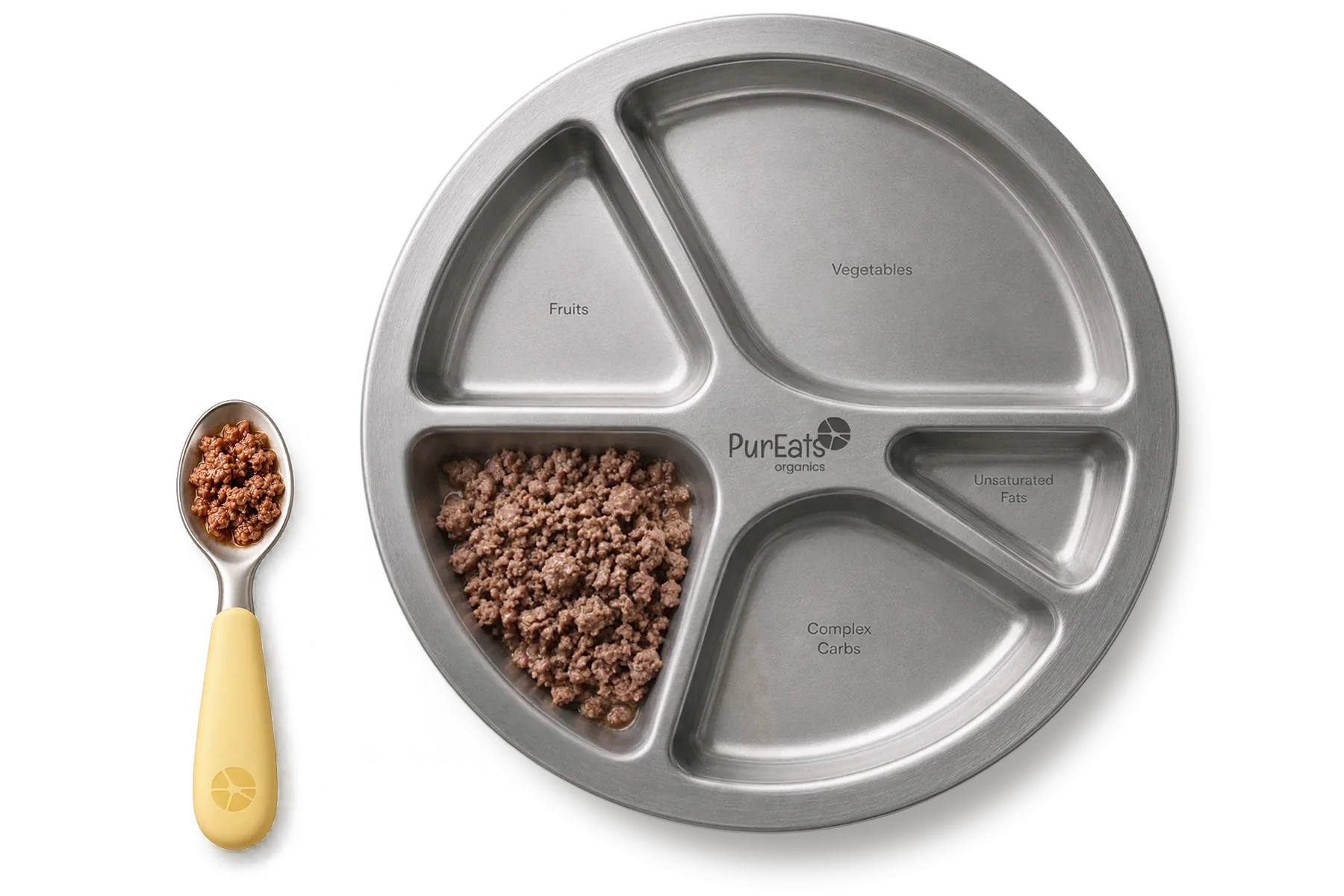
1. What Is It?
Your baby’s first plate does not need to be full on day one. At about six months, start with one soft, iron-rich food, then add new foods one at a time over the next few weeks. Vegetables, fruit, yoghurt or cheese, and grains join gradually, and textures get lumpier as you go.
So, what can the first month look like?
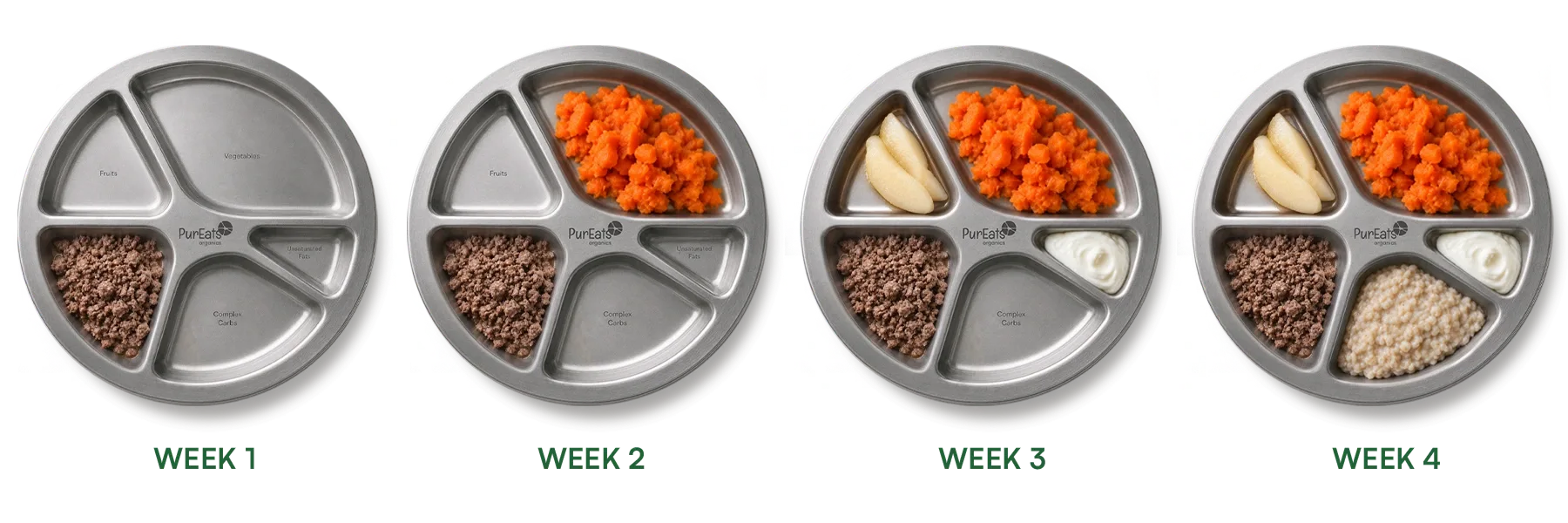
- Week 1 (the iron block): one iron-rich food, such as minced beef, mashed lentils or iron-fortified infant cereal
- Week 2: the iron-rich food plus one vegetable, such as soft-cooked carrot or sweet potato
- Week 3: add a fruit and a spoonful of yoghurt or a little soft cheese
- Week 4: add a grain, such as oats or soft pasta, and the plate is close to full
That is one way to pace it, not a rule. The only fixed point is iron first. Think of the first month as filling the plate one section at a time, not serving a complete meal from the first spoonful.
2. Why It Matters During Starting Solids
- The pressure peaks in the first weeks. Every book, app and relative has an opinion, and the first spoonful often comes straight back out. It is easy to feel behind before you have even started.
- Iron comes first, everything else can wait a week. Health Canada and the Canadian Paediatric Society (CPS) both name iron-rich foods as the place to start. Colours, textures and favourite fruits can arrive over the following weeks.
- One new food at a time makes reactions easier to read. When something new goes on the plate on its own, you can see how your baby responds to it.
- Slow is normal. Some babies need to try a food many times before they accept it. A refused carrot on Tuesday is not a verdict on carrots.
3. What Does the Science Say?
Most babies are ready for solids at about six months. The signs to look for are sitting up without support, leaning forward, and good control of the neck muscles. CPS also notes that some babies need to try a food many times before accepting it.
At about six months, breastfeeding should still be the main source of nutrition, and solids are added alongside it. Health Canada recommends iron-rich meat, meat alternatives and iron-fortified cereal as the first foods, offered two or more times a day between six and 12 months. This is why the iron block goes on the plate first.
Vegetables, fruit, and milk products such as cheese and yoghurt can be introduced between six and nine months, along with a variety of iron-rich foods. Finger foods can be offered from six months, and lumpy textures no later than nine months. That is why the plate fills up over weeks, not on day one.
Foods should be prepared and served with little or no added salt or sugar. Hard, small and round, or smooth and sticky foods should be avoided, and babies should always be supervised while eating. Honey should not be given before one year, because of the risk of infant botulism.
Common allergens such as peanut products and eggs can usually be introduced at around six months. Once your baby tolerates one, offering it a few times a week helps maintain tolerance. If your baby has eczema, or a parent or sibling has an allergic condition, talk to your healthcare provider about timing.
Finally, the amount is not yours to decide. In Health Canada’s words, “at every age the child decides how much they want to eat and whether they want to eat at all.”
4. What Parents Can Do Today
-
1
Check readiness, then start with one iron-rich food
Pick something soft: well-cooked minced beef or chicken, mashed lentils, well-cooked egg, or iron-fortified infant cereal. Offer an iron-rich food twice a day, alongside your usual milk feeds.
-
2
Add one new food at a time
CPS suggests offering no more than one new food per day, so you can see how your baby responds. After iron, there is no required order: the week-by-week plan above is one way to pace it.
-
3
Keep it safe and let baby lead
Serve foods soft enough to squash between two fingers, with no added salt or sugar and no honey. Sit with your baby at every meal. Offer, then stop when your baby turns away or closes their mouth. Move towards lumpier textures and finger foods, reaching lumpy textures by nine months at the latest.
Save this for week one. One section today, a few more each week, until the plate is full. Prefer a plate that makes the build-up easy to see? Our five-section stainless steel baby plate is open for preorder. Want to see what a full plate looks like? Read The 5-Block Method.
General feeding education, adapted from Health Canada and Canadian Paediatric Society guidance. It does not replace advice from your child’s healthcare provider.
Sources
Every claim above links to a specific, named source, not a general reference.
- Health Canada, Canadian Paediatric Society, Dietitians of Canada & Breastfeeding Committee for Canada. Nutrition for Healthy Term Infants: Recommendations from Six to 24 Months. Page modified 30 October 2025
- Canadian Paediatric Society, Caring for Kids. Feeding your baby in the first year. Updated January 2020
- Canadian Paediatric Society. Timing of introduction of allergenic solids for infants at high risk (position statement). Posted 24 January 2019, updated 19 February 2020
Related reading
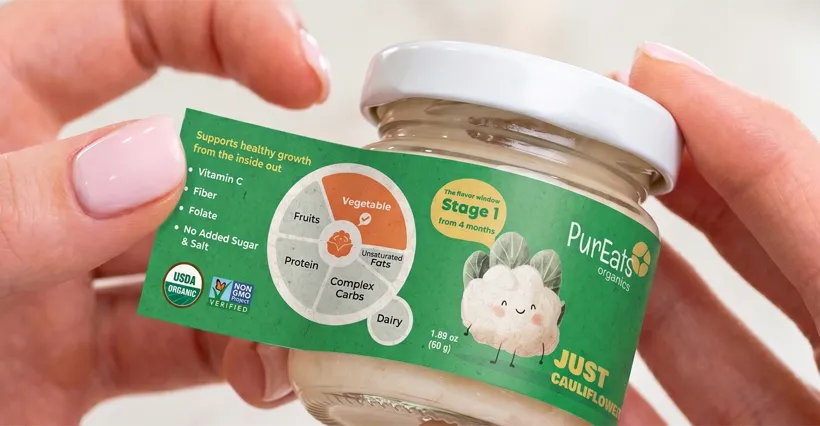 Label literacy
What should I actually look for on a baby food label?
Ingredient lists, added sugars, marketing claims, and what actually matters on a label, explained with real product examples.
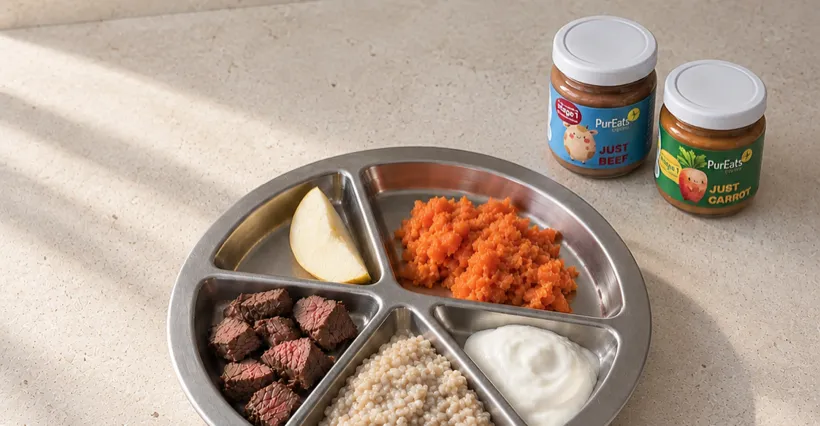 The 5-Block Method
What goes on my baby’s plate every day?
Protein, Vegetable, Complex Carbs, Unsaturated Fats, Fruits: what each block does and why the proportions matter.