

What should I actually look for on a baby food label?
1. What Is It?
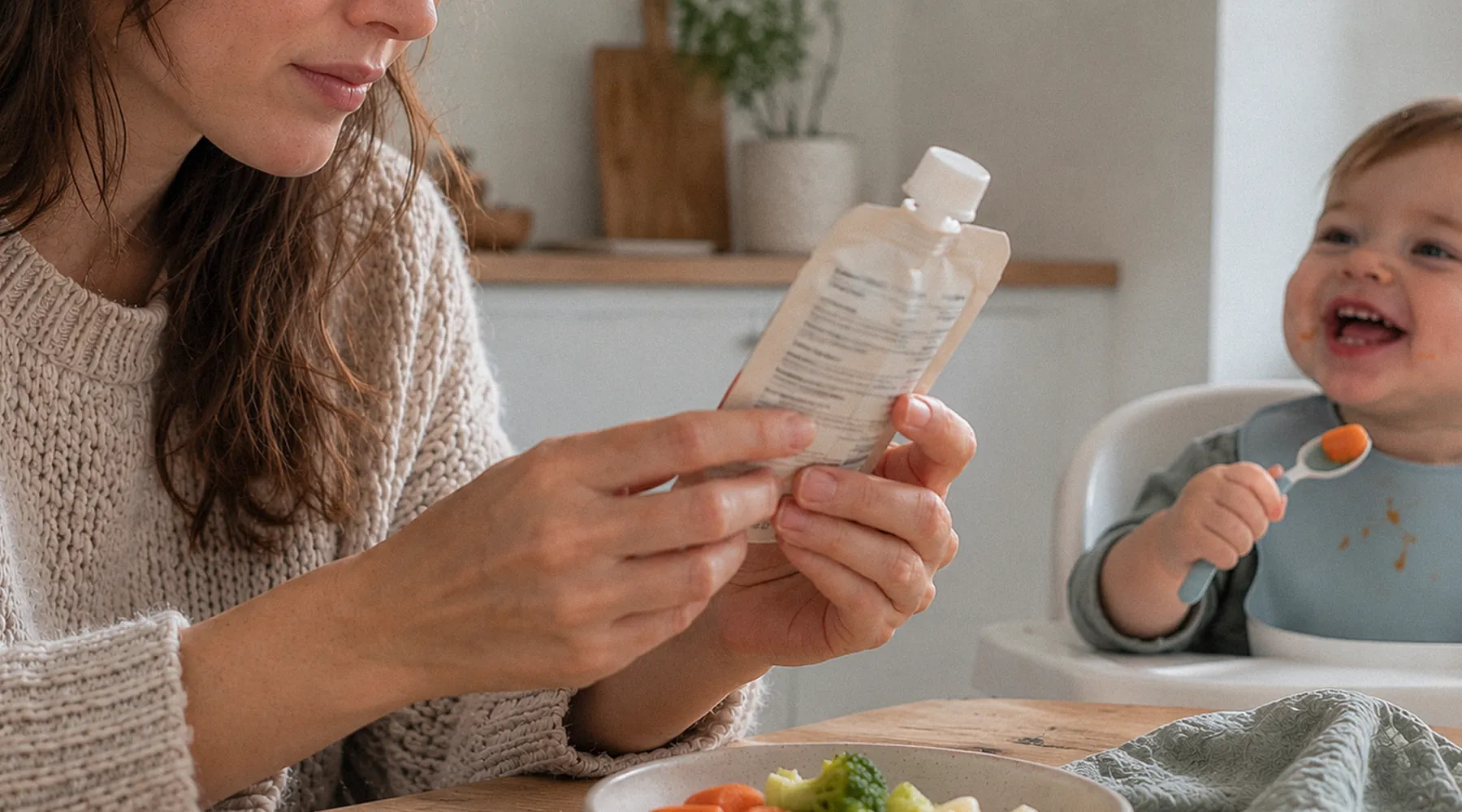
A food label has two parts that matter, and most parents only read one. The front of the package is marketing, designed to make you feel good about the purchase. The ingredient panel and nutrition facts on the back are the actual product. Learning to read the back first, and the front second, changes almost every decision you make in the baby food aisle.
2. Why It Matters During Starting Solids
- The first 12 months establish taste preferences that influence eating patterns for years. What’s hiding in a label shapes that foundation, whether you can see it or not.
- Babies have no reference point for "normal" sweetness yet. Every early exposure to added or concentrated sugar recalibrates what they expect food to taste like going forward.
- Marketing claims like "organic" or "non-GMO" describe sourcing, not nutritional composition. A product can be organic and still be mostly fruit concentrate.
3. What Does the Science Say?
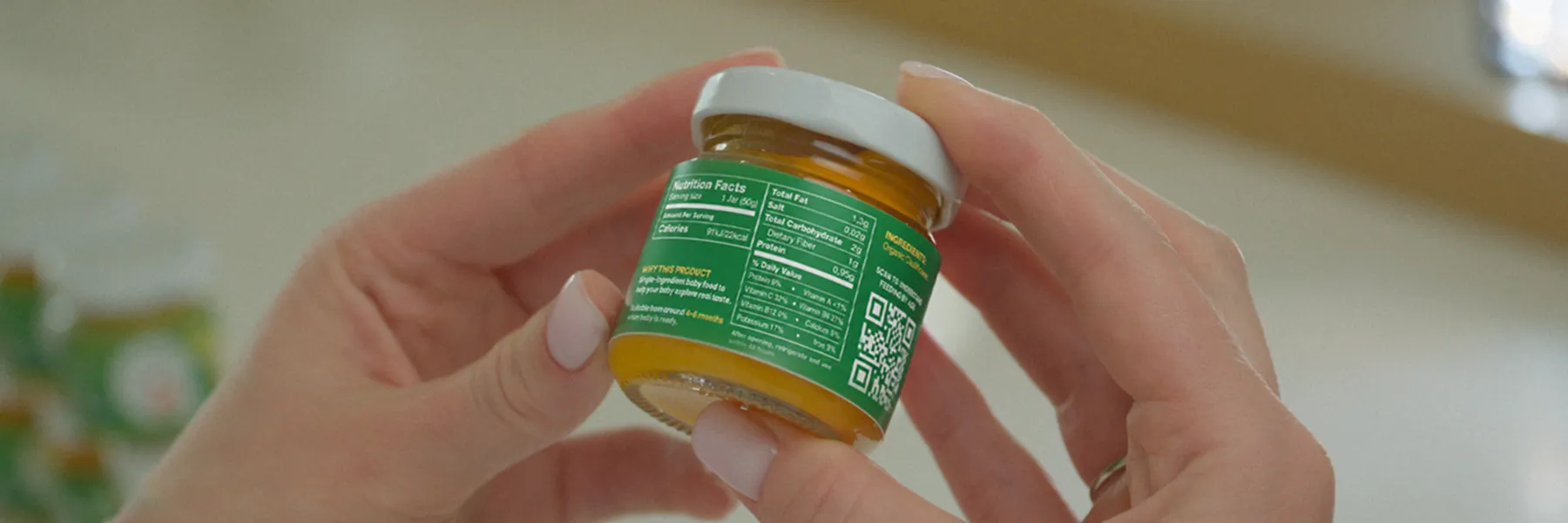
Ingredient order matters: ingredients are listed by weight, highest first. If a sweetener appears in the first three ingredients, sugar is a primary component of the product, regardless of front-label claims.
"No added sugar" does not mean low sugar. A 2023 audit of 276 infant food pouches found total sugar content ranged widely (0.8 to 17.5g per 100g), and 59% of pouches claimed "no added sugar" despite containing free sugars from concentrated fruit purees and juices.
Complementary feeding guidance now emphasizes gradual, responsive introduction of solid foods, respecting hunger and satiety cues: the ingredient quality of what fills that gap matters more as solids increase.
4. What Parents Can Do Today
-
1
Flip it first
Before reading any front-label claim, check the ingredient list. If you don’t recognize an ingredient as a whole food, that’s your first flag.
-
2
Count to three
Look at the first three ingredients only. They make up the majority of the product. If a sweetener or concentrate is in the top three, treat it as a sometimes food, not an everyday one.
-
3
Compare two products side by side
Pick the same category (two pouches, two yogurts) and compare ingredient lists directly. The difference is usually obvious within seconds.
Sources
Every claim above links to a specific, named study or regulatory source, not a general reference.
- U.S. Food and Drug Administration 21 CFR 101.4(a)(1): Food; designation of ingredients · Ingredient declaration by descending order of predominance by weight
- Brunacci KA, Salmon L, McCann J, Gribble K, Fleming CAK The big squeeze: a product content and labelling analysis of ready-to-use complementary infant food pouches in Australia. BMC Public Health, 2023;23:656
- Swanson WS, et al. Essential elements for learning to eat: guidance to support families with infants and young children. Frontiers in Pediatrics, 2025
- Government of Canada Food and Drug Regulations, C.R.C., c. 870, s. B.01.008.2 and B.01.008.3 · Order of ingredients by weight and grouping of sugars-based ingredients