
What goes on my baby’s plate every day?
1. What Is It?
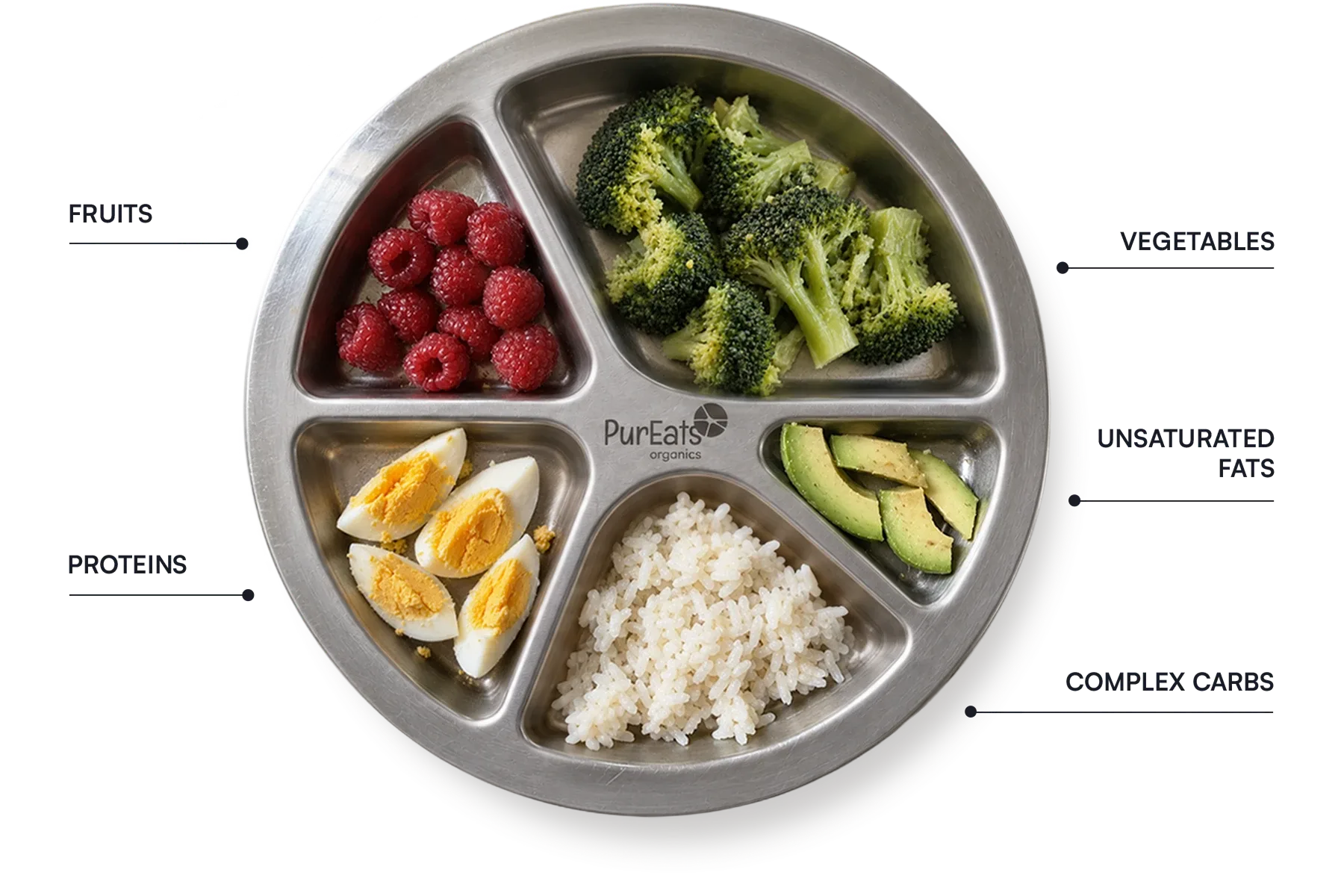
A balanced plate for baby is not a recipe. It is a pattern. The 5-block baby plate method gives every meal the same five building blocks, so you never need a weekly meal plan, only whatever is already in your fridge or kitchen.
So, what should a baby plate look like?
- Proteins (the iron block): beef, chicken, fish, eggs, lentils, tofu
- Vegetables (the colour block): carrot, sweet potato, broccoli, zucchini, soft-cooked until it squashes between two fingers
- Complex carbs (the energy block): iron-fortified infant cereal, oats, potato, pasta, bread, quinoa
- Unsaturated fats (the good-fat block): olive oil, avocado, full-fat yoghurt, fatty fish
- Fruits (the “something to hold” block): a soft, ripe pear strip, banana, berries flattened or quartered
That is the whole system. A typical plate takes five minutes with leftovers: shredded beef from last night’s dinner, iron-fortified oat cereal, roast carrot, a spoonful of yoghurt and one pear strip to hold. Learn the 5-block baby plate method once and you can build any meal from it.
2. Why It Matters During Starting Solids
- Plans break, frameworks don’t. You run out of the one vegetable the plan was built on, someone naps through lunch, and suddenly you have failed at 11am. Five slots survive all of that, because any carrot can be swapped for any other vegetable.
- Each block on a starting-solids plate does a different job. Meat, fish, eggs, lentils and tofu bring iron and protein, vegetables and fruit bring variety and fibre, carbs bring energy, and healthy fats pack a lot of energy into a small spoonful. Skip one block regularly and the plate quietly loses its balance.
- Iron is the block that matters most early on. From around six months the iron stores babies are born with run down, and milk alone stops covering it. Health Canada recommends iron-rich foods two or more times a day, and starting every plate with the iron block is the simplest way to make sure it happens.
- Tiny stomachs have enormous needs. Small portions have to be dense in nutrients, which is why what goes on the plate matters more than how much gets eaten.
3. What Does the Science Say?
Canadian guidance recommends iron-rich foods (meat, meat alternatives, and iron-fortified cereal) as the first complementary foods, offered two or more times a day between six and 12 months. This is the reason Protein is the first block on the plate, and why iron-fortified infant cereal is a smart pick for the carb block.
European guidance agrees that all infants should receive iron-rich complementary foods. It also recommends moving beyond prolonged puréed feeding towards lumpier textures, offered no later than 8 to 10 months, and it advises parents to respond to hunger and fullness rather than a fixed amount. That is why each block starts as a spoonful or two and baby decides the rest.
Proportions matter too. The same ESPGHAN review notes that a high protein intake during the complementary feeding period has been linked with a higher risk of overweight later in childhood. Protein is one block of five, not the main event.
4. What Parents Can Do Today
-
1
Start with the iron block
Pick the protein first: beef, chicken, fish, egg, lentils or tofu, finely shredded, minced or mashed. Everything else gets built around it.
-
2
Fill the other four from the fridge
One vegetable, one complex carb, one fat, one fruit. Whatever you have is the right choice. Out of carrots? Use sweet potato. The framework doesn’t care which one, only that the slot is filled.
-
3
Keep portions tiny and let baby lead
Start with a spoonful or two of each block and offer more only if baby asks. Keep everything soft enough to squash between two fingers, and stay with your baby throughout the meal. As baby grows, the same five blocks follow them from first spoon to family table, with lumpy textures offered no later than 9 months and cow’s milk (3.25%) as a drink from 9 to 12 months, not before.
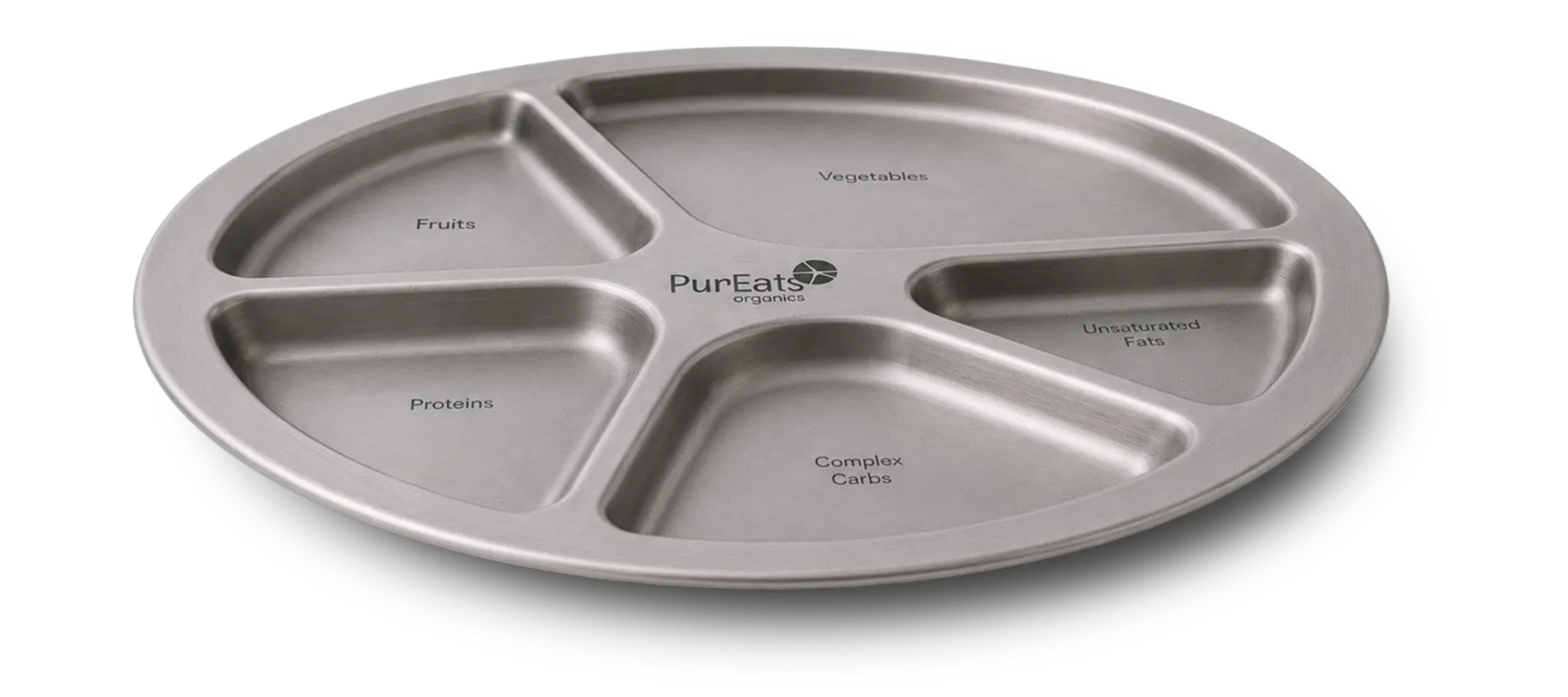
Save this for the 5pm panic. Take a plate, fill five slots, done. From the very first plate onwards, you can log what you served in the baby food tracker app and ask Nora AI what to try next. Prefer a plate that does the sectioning for you? See our stainless steel divided baby plate.
General feeding education, adapted from Health Canada and ESPGHAN complementary feeding guidance. It does not replace advice from your child’s healthcare provider.
Sources
Every claim above links to a specific, named study or regulatory source, not a general reference.
- Health Canada, Canadian Paediatric Society, Dietitians of Canada & Breastfeeding Committee for Canada (2014). Nutrition for Healthy Term Infants: Recommendations from Six to 24 Months
- Fewtrell M, Bronsky J, Campoy C, et al. Complementary Feeding A Position Paper by the ESPGHAN Committee on Nutrition. J Pediatr Gastroenterol Nutr. 2017;64(1):119-132